
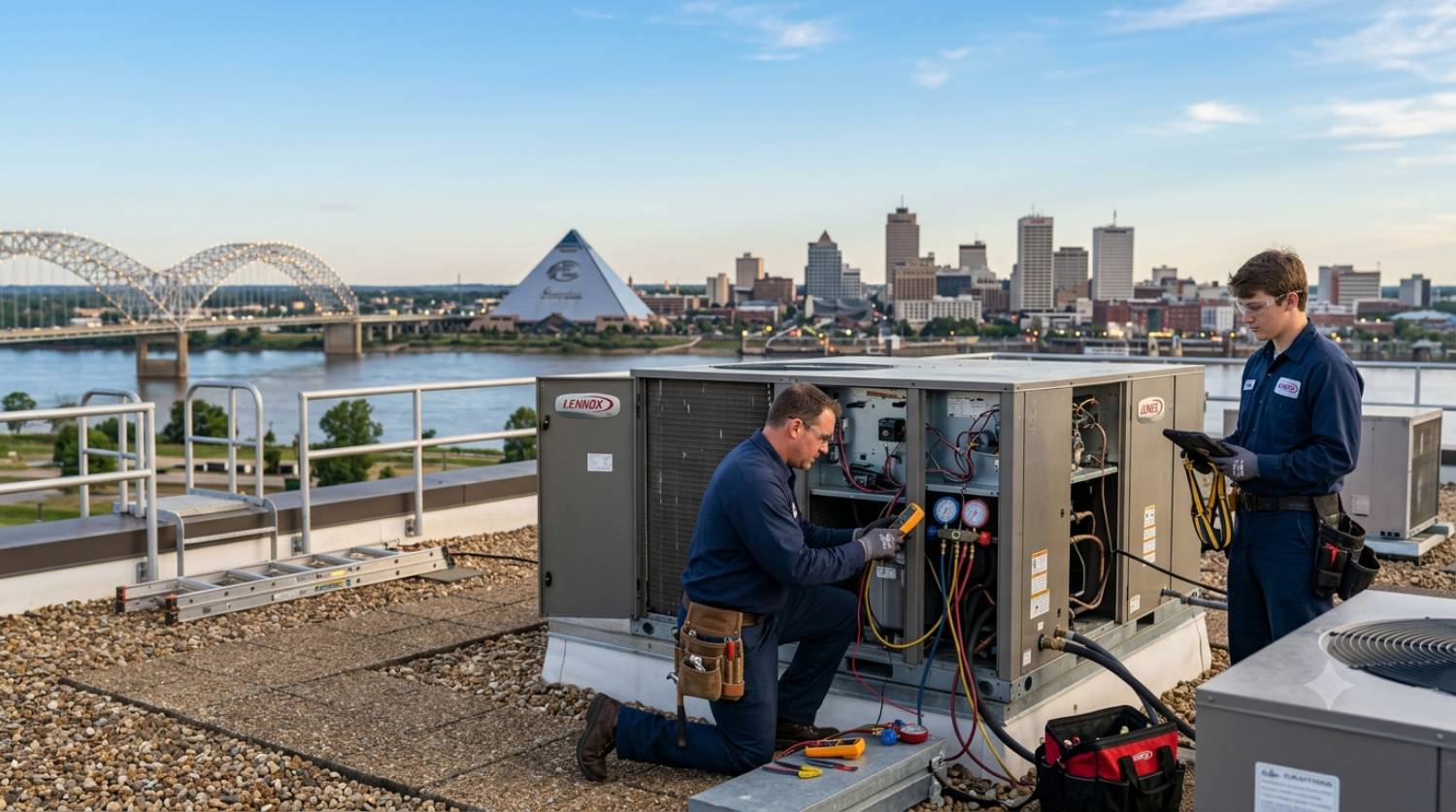
Commercial facilities in the Mid-South face unique operational demands due to severe seasonal temperature swings, intense summer humidity, and sudden winter cold snaps. Selecting the right mechanical contractor directly impacts indoor air quality, tenant comfort, utility expenditures, and continuous business operations. Facility managers must look beyond basic pricing models to evaluate technical expertise, response capabilities, and specialized equipment knowledge before signing long-term HVAC service agreements.
Managing local building codes and commercial mechanical systems requires a specialized operational approach. Partnering with a licensed contractor offering commercial heating and air services Memphis businesses rely on ensures that rooftop package units, chillers, and automated building management systems receive expert attention. Professional mechanical support prevents costly operational downtime, reduces emergency equipment breakdowns, and maintains steady environmental controls throughout demanding commercial properties.
Evaluating Licensing, Certifications, and Regional Compliance
Commercial mechanical contractors must hold active state licenses issued by the Tennessee Department of Commerce and Insurance Board for Licensing Contractors. Verifying EPA Section 608 certifications ensures field technicians possess proper credentials to handle refrigerants legally and safely. Furthermore, qualified service providers maintain comprehensive general liability and workers’ compensation coverage, protecting property owners from financial liabilities during complex mechanical installations or major equipment overhauls.
Compliance with local Shelby County amendments and International Mechanical Code standards is essential for all commercial retrofits and new equipment installations. Municipal regulations dictate precise outdoor ventilation air exchange rates, fire damper placements, and energy efficiency minimums. Experienced providers understand regional building code enforcement procedures, securing proper mechanical permits quickly to avoid project delays, unexpected municipal fines, or failed building safety inspections.
Establishing a contract with an experienced mechanical team guarantees that your facility adheres to evolving environmental guidelines and local municipal building mandates. Investing in established commercial heating and air services Memphis operators trust provides peace of mind through structured code compliance checks. Experienced contractors verify that equipment installations meet strict ASHRAE standards, preserving indoor air quality while reducing overall facility energy consumption.
Emergency Response Capabilities and Preventative Maintenance Contracts
Unplanned cooling or heating outages can halt business operations, spoil sensitive inventory, and create uncomfortable environments for employees and visitors. A trustworthy commercial service provider must offer guaranteed around-the-clock emergency response protocols with clear contractual arrival times. Inquiring about emergency dispatch procedures, local service vehicle parts availability, and weekend labor rates helps facility directors avoid costly surprises during unexpected mid-winter or mid-summer system lockouts.
Customized preventative maintenance agreements form the cornerstone of long-term equipment health and budgetary predictability. Standard maintenance schedules should include semi-annual coil washings, belt adjustments, electrical contactor inspections, filter changes, and dynamic sensor calibrations. Tailoring maintenance visits around your facility’s operational schedule minimizes workplace disruptions while extending the physical working lifespan of expensive capital assets like compressors, blowers, and burner assemblies across the building.
Comprehensive service logs and digital asset tracking provide valuable data for future capital expenditure planning. Highlighting equipment performance trends, recurring component wear, and energy efficiency drops enables managers to budget for planned replacements well before catastrophic equipment failures occur. Reliable contractors document every service visit digitally, giving building owners complete visibility into historical repair costs, system health, and warranty status over time.
Diagnostic Capabilities and Advanced Control Systems
Modern commercial facilities rely on sophisticated building automation systems to manage variable refrigerant flow networks, economizers, and multi-zone air distribution. Qualified service teams must possess diagnostic tools like thermal imaging cameras, combustion analyzers, and digital manometers to evaluate static pressure drops accurately. Technical proficiency in BACnet and Modbus control protocols ensures technicians can integrate mechanical repairs seamlessly into central automation networks.
Evaluating indoor environmental health requires analyzing fresh outdoor air intake rates and humidity controls alongside basic temperature setpoints. Commercial contractors should understand advanced air filtration technologies, including MERV-rated filters and bi-polar ionization equipment. Properly managed ventilation limits airborne contaminants, controls excess summer moisture, and maintains healthy indoor environments, directly boosting employee productivity and reducing sick leave occurrences across commercial workspaces.
Essential Provider Qualification Criteria
Selecting the ideal mechanical partner requires comparing candidate firms against essential operational benchmarks. Prioritizing structured qualification checks safeguards your facility investment while ensuring consistent indoor environmental control year-round. Property owners and commercial facility managers should systematically evaluate prospective mechanical contractors against these critical industry criteria before signing any long-term maintenance service agreement for their local commercial real estate property location:
- Active state mechanical licenses and certified EPA technician credentials across all field service staff.
- Guaranteed emergency response times supported by local parts inventories and dedicated dispatch teams.
- Proficiency in building automation systems, variable refrigerant flow technology, and digital diagnostics.
- Transparent preventative maintenance contracts detailing specific semi-annual equipment servicing tasks.
- Proven track record in Shelby County code compliance, mechanical permitting, and regional safety standards.
Investing in ongoing professional training ensures technician proficiency on newly manufactured equipment and updated refrigerants. Modern A2L mildly flammable refrigerants require specialized recovery procedures and advanced leak detection protocols. Selecting a commercial service provider that mandates continuous factory training equips field staff to service cutting-edge HVAC hardware safely, keeping your mechanical systems fully compliant with evolving federal environmental regulations nationwide.
Select Qualified Contractors
Selecting the right commercial HVAC provider protects your building infrastructure, lowers long-term operational costs, and ensures stable indoor climate control. Prioritizing verified state licenses, emergency response protocols, and building automation expertise allows facility managers to establish dependable mechanical partnerships. Routine preventative maintenance and digital asset tracking keep rooftop units, chillers, and distribution systems running efficiently. Take proactive control of your commercial property today by systematically evaluating prospective service providers against these essential criteria and scheduling a comprehensive mechanical system audit for your commercial building property.